


Blaine City Council unanimously approved city staff to prepare an official plan to de-annex the Grandis Pond urban growth area (UGA) that could go before Blaine voters as soon as the November election. The city then plans to redistribute that UGA land from east Blaine to Semiahmoo for high-density housing.
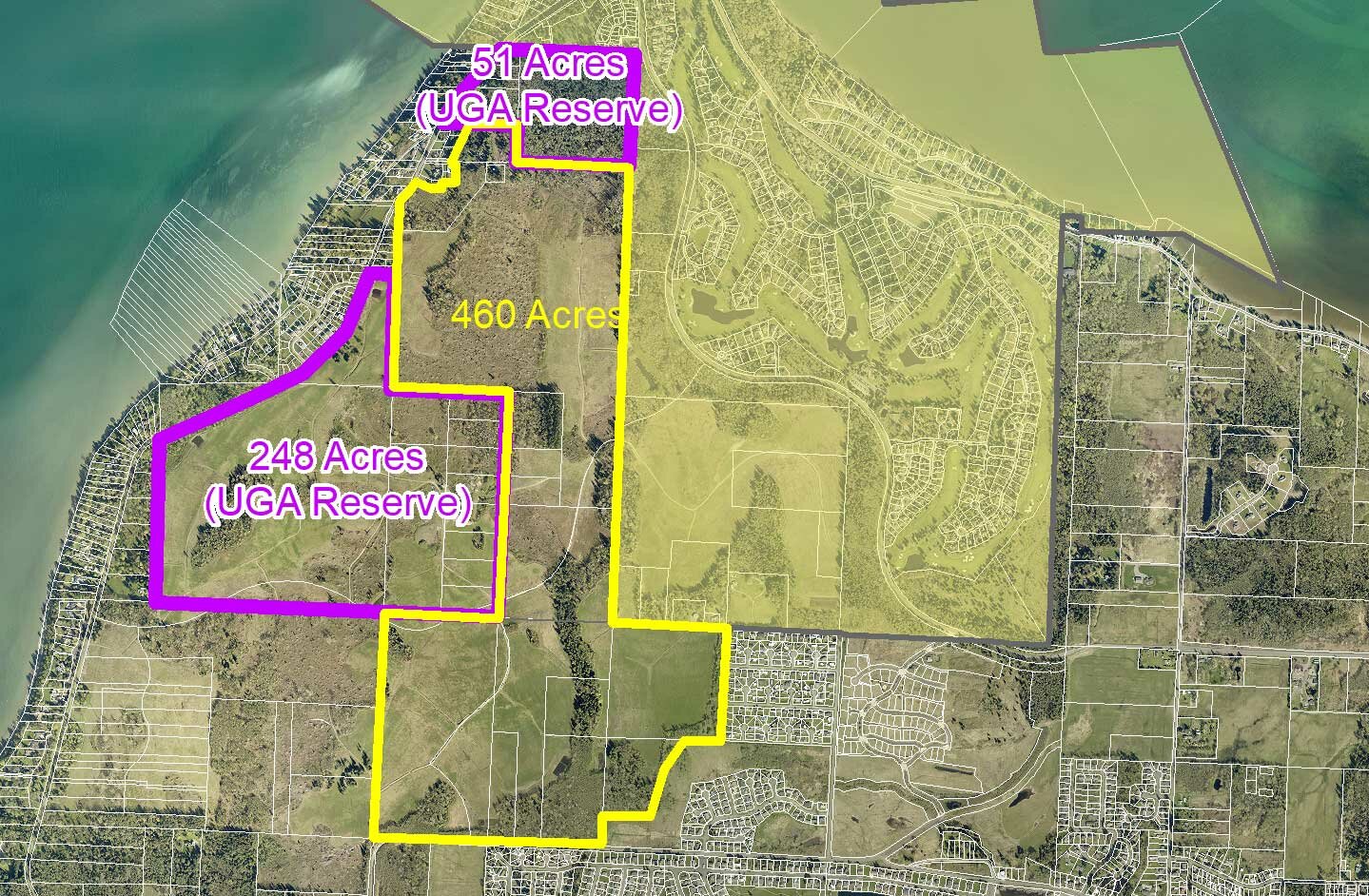
Under the city’s proposed UGA swap, it would de-annex about 500 acres of land between the Grandis Pond property in east Blaine and the Harbor Shores property near the mouth of Dakota Creek. It would then add 460 acres of UGA land and nearly 300 acres of UGA reserve southwest of Semiahmoo. The plan would also add 124 acres of UGA land behind the fire station on Odell Road that the city is interested in zoning for manufacturing.
The earliest the swap could happen would be late this year or early next year, when the city completes its comprehensive plan update, said Alex Wenger, the city's planning director .
De-annexation could potentially be put on the November 4 ballots, city officials said. The city would then need to annex the land it’s seeking to use as UGA and UGA reserve in west Blaine.To annex land in Washington state, the most common way is the 60 percent petition method, which requires the support from property owners representing 60 percent of the assessed value of the proposed annexation area. Wenger said there were two property owners of the proposed west Blaine UGA land, one of whom was represented at the meeting on Monday night. Wenger said after the meeting that the representatives, from Ocean View Farms LLC, owned 237 acres of land that could be used for the UGA and were in favor of the city’s proposal.
“People in Blaine can voice their opinion on the ballots,” mayor Mary Lou Steward said.
Council discussed the de-annexation during a study session on April 28 before voting on it during its regularly scheduled meeting later that evening. The vote was 5-0 with councilmembers Eric Davidson and Rhyan Lopez absent.
If the city swapped UGAs, it would cost $14.2 million more to develop sewer and water infrastructure in west Blaine than east Blaine. While developers would mostly fund that infrastructure, the city would be in charge of operating and maintaining it. Wenger added that the water infrastructure would improve Semiahmoo’s water supply, which he said “could be more robust.”
If the city did not plan for growth in Semiahmoo, it would need to either stick with its original plan to develop in east Blaine, where it would build on the aquifer but utility infrastructure would be cheaper for the city, or it would need to infill development within city limits.
“We have a lot of capacity today but 20 years from now, we’re going to have some tough decisions to make if there’s nowhere to put the housing,” Wenger said. “We’re going to have to fit thousands of more people in the city. Where are they going to go?”
Councilmember Sonia Hurt said she would be in favor of middle-density housing in the west Blaine UGA to strike a compromise with Semiahmoo residents who have been surrounded by forested lands.
“It doesn’t make sense to do an urban growth area swap and bring in a new piece of west Blaine UGA at low density,” Wenger said. “It doesn’t pay for itself over time.”
Councilmember Richard May said he didn’t think the development would be visible to the current Semiahmoo neighborhoods because it’s on the other side of the hill.Wenger said development could potentially attract medical facilities or grocery stores to serve both the Semiahmoo and Birch Bay communities, helping make it a place where people could remain in the community as they aged. Hurt said she knew Birch Bay residents were concerned about the city’s de-annexation plan, and asked Wenger how it would be decided who received the land if Birch Bay residents seeking incorporation wanted it. Wenger replied that Whatcom County would need to approve growth area boundary amendments and the city would need to negotiate with Birch Bay Water and Sewer District.
“This is not just an opportunity for Blaine,” Wenger said. “This is an opportunity for the whole region to have an area to build quality housing for a long time.”
City staff first brought the plan to council’s attention last October. Staff began considering the UGA swap after land slated for the future Grandis Pond housing development was sold to east Blaine residents Kevin Keck and Rebeka Ruiz-Lembo for $10 million in December 2023.
In October, Wenger had said he was concerned Grandis Pond would not be developed because construction plans hadn’t been submitted to the city and were set to expire. Wenger said after the recent council meeting that he spoke with the Grandis Pond developers in late February and they indicated they weren’t interested in developing their property using the same level of density. Keck is a former software engineer whose work now includes being owner of Grandis Pond Equity, according to his LinkedIn account. He did not immediately respond to an interview.
The city annexed the area in 1996 for Grandis Pond, but the development stalled because of the expense of bringing utility infrastructure to the area. Grandis Pond has been considered one of the largest areas slated for housing development in Whatcom County, which, when built out, was planned to have over 1,100 residential units.
City staff, who in recent years have denied residents’ concerns about building on the aquifer, now argue that de-annexing Grandis Pond would protect the aquifer recharge area and other natural resources. Wenger said that while the city code has safeguards in place to ensure the aquifer isn’t impacted, Grandis Pond was in the high recharge area, which is the most sensitive area to the aquifer. “To absolutely minimize any impacts to our drinking water source, limiting development is probably a good idea,” Wenger said.