


Blaine City Council voted 5-1-1 during its Monday meeting to approve an interim ordinance that would create a one-year Wild West for downtown zoning by eliminating building height restrictions, design review and minimum parking requirements.
In theory, the one-year window could give developers an opportunity to create a skyscraper with any design of their choosing in downtown Blaine, though Blaine Planning Director Alex Wenger said other regulations could impose additional requirements.
“I would look at it like an economic stimulus package that’s valid for up to one year,” Wenger said.
City Manager Mike Harmon asked the planning department to review possible changes to its downtown zoning regulations that could incentivize housing growth.
Wenger said the decision was a culmination of several factors, including the city struggling to attract downtown developers and housing growth sprawling from the city. It also came as the city was updating its comprehensive plan for long-term growth and responding to new state legislation focused on increasing housing stock, especially for affordable homes.
Design requirements will become guidelines that still require staff approval. Other reviews, such as for ADA and stormwater, will remain. Larger buildings will also have a State Environmental Policy Act review that could trigger additional requirements, Wenger said.
Harmon told the council that the city could reverse its interim ordinance if it received an influx of development interest.
Councilmembers Sarbie Bains, Don Enos, Isaac Newland, Jiggy Sorrell and Mayor Mary Lou Stewad voted in support, while Richard May was against and Sonia Hurt abstained.
Washington state law allows city council to enact interim zoning ordinances for up to one year without prior public hearing, as long as the public is allowed a hearing two months after the ordinance’s adoption and city staff develops a work plan to study the related zoning changes.
The interim ordinance may be extended in six-month increments after one year if a public hearing is held before each extension.
Permanent zoning changes go before the planning commission, which makes a recommendation to city council, often requiring deliberation over several meetings.
The interim ordinance had not been discussed at a prior council meeting, and a public hearing notice was later published March 5 on the city’s website. Wenger said city staff decided to hold the hearing during the same meeting as the vote, which he said allowed councilors enough time to vote.
Harmon and Steward recently met with developers who wanted to build in downtown Blaine, but said government regulations were a barrier. Attracting that growth has been an ongoing challenge for the city, which has faced lower sales tax revenue, especially from lower border traffic in recent years.
“Since I’ve been your manager in Blaine, the one word I’ve heard over and over is potential. Blaine has so much potential,” Harmon said. “Why can’t Blaine unlock its potential?”
The decision followed contentious zoning changes in 2024 that drew public pushback but failed to attract downtown developers.
These interim changes are more significant than those made in 2024, when council allowed building heights on the west side of Peace Portal Drive to increase from three to four stories, and allowed developers to have reduced downtown residential parking requirements in exchange for paying the city a fee for transportation improvements.
City staff wanted to revisit maximum height restrictions because the limitations made housing less affordable by limiting the number of units on one lot.
Staff also said parking requirements had an inordinate impact on housing costs, and pointed to two brief parking studies that city consultants conducted in 2024 that showed downtown Blaine had adequate parking.
Wenger said the city wants to direct new growth downtown, where the city just finished a $4 million downtown revitalization project and infrastructure is already in place. Over the past few years, most of the city’s housing growth has been focused in east and west Blaine, which require costly utility infrastructure.
Wenger said the changes would better align with recent statewide legislation that asked cities to plan for affordable housing, allow existing mixed-use buildings to accommodate more housing, and streamline design review processes.
Johannes van Leenen is CEO and president of Fifth Avenue Homes, a Canada-based development company that is considering two buildings in downtown Blaine.
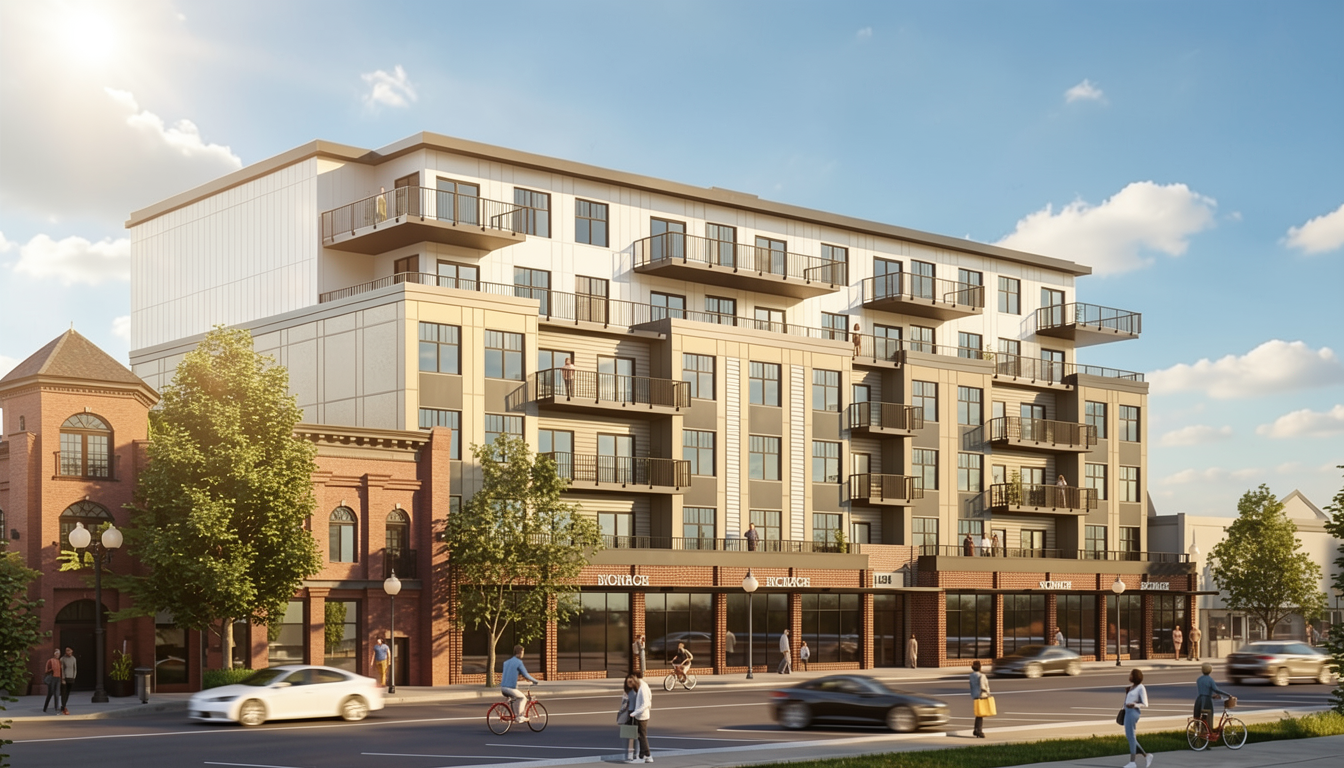
During the meeting, van Leenen said the interim ordinance would allow his company to move forward with a six-story building it designed for 648 Peace Portal Drive, between Black Forest Steak House building and Ttowa Sushi.
The building, called Peace Portal Rentals, would have 54 rental residential units above street-level commercial space, according to the Fifth Avenue Homes website.
Fifth Avenue Homes' website also lists a six-story building called Blaine Harbor Rentals at 277 G St., the current location of The Vault Wine Bar and Bistro. Van Leenen said Fifth Avenue Homes would “wait and see” what happens with the Peace Portal Drive property before making a decision on the building.
The Vault co-owners Joni and Alan Finston said they have not been contacted by Fifth Avenue Homes or had any formal conversations about the property.
“We have a development that’s already been designed that we would like to start building on,” van Leenen said.
Over a dozen people discussed the zoning proposal during the public hearing, many of whom were in support of downtown growth but were wary of what fewer development restrictions and taller buildings could mean for maintaining the city’s character.
Blaine resident Kyle Burton said the interim ordinance brought mixed emotions.
“It’s exciting for growth, and then also what’s going to come of it?” Burton said.
Drayton Harbor Oyster Co. co-owner Steve Seymour told council he wasn’t sure how he felt about the interim zoning changes. He said he applauded the city for trying to spur downtown growth, but was worried what it would mean to remove design and height requirements.
Blaine resident Benjamin Meeker said he was concerned there wasn’t enough housing for young adults.
“The kids graduating high school today, long term, how are they to live in Blaine if they love Blaine?” Meeker asked. “My only recommendation is anything you can do to help more housing in Blaine.”
Following the public comment, May recommended council approve the interim ordinance with an amendment that removed the garden district, a one-block district buffering the Salishan Neighborhood, whose residents have raised concerns about downtown development near their homes.
Councilmember Sarbie Bains said Salishan residents didn’t attend the meeting to share their perspectives.
“They knew the meeting was happening. Everything is publicized, right?” Bains said. “So I think if somebody had a problem with it, why wouldn’t they show up?”
Hurt responded that residents didn’t attend because the hearing was quickly put together.
“It’s unusual to do something within just a two-week period,” Hurt said.
May’s amendment was struck down by other council members before council approved the temporary removal of downtown building height, design and parking restrictions.
The new zoning changes will go into effect March 16.
Nolan Baker contributed to the reporting of this article.
This article was updated March 16 to include a comment from Joni and Alan Finston. The article was updated on March 18 to include an additional comment from Johannes van Leenen.