
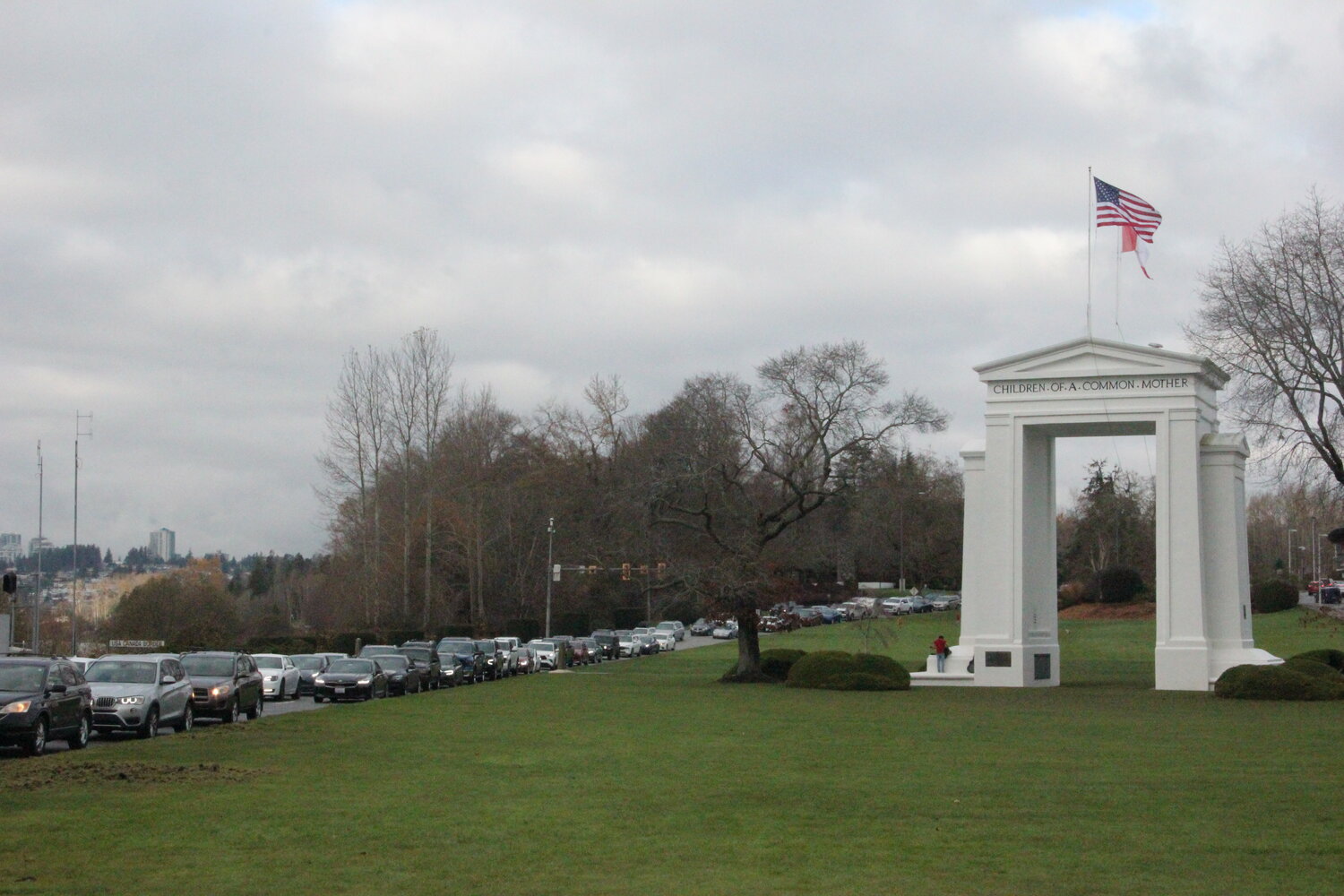
For residents of Blaine and Point Roberts, the collapse of tariff negotiations between the U.S. and Canada this weekend will not be abstract: It will unfold at the grocery cash register and in the balance sheets of local businesses, a reflection of how intertwined our local economies and daily lives are with Canada.
New, 50% U.S. tariffs on more than 500 Canadian products took effect Saturday. The targeted goods represent about $20 billion of the roughly $382 billion in products the United States imported from Canada last year and include dairy products, clothing, plywood and other building materials, paper products, honey and a long list of consumer goods.
The tariffs come on top of existing U.S. duties affecting Canadian steel, aluminum, automobiles and softwood lumber.
Canadian Prime Minister Mark Carney has promised to retaliate dollar for dollar with new Canadian tariffs taking effect Sept. 8. Those tariffs are expected to target U.S. steel, dairy products, appliances, agricultural equipment, pulp and paper and electronics.
“These new tariffs aren’t leverage over Canada,” U.S. Rep. Rick Larsen said in a statement over the weekend. “They’re yet another way that the Trump administration is raising your prices and sabotaging the American economy.”
The new U.S. tariffs are also historically unusual.
President Donald Trump imposed them using Section 338 of the Tariff Act of 1930, a nearly century-old provision allowing tariffs of up to 50% against countries found to discriminate against U.S. commerce. Although previous administrations considered or threatened to use the provision, the Canada tariffs appear to be the first time Section 338 has actually been used to impose tariffs.
Cooling relations, fewer visitors
City leaders and local businesses said the new tariffs will continue to widen the rift between once-close neighbors and trade partners who used to cross the border to shop, pick up parcels, eat and play in the U.S.
“Unfortunately, we expect relations with our friends across the border to further deteriorate. Businesses were just starting to report that Canadian traffic was increasing, and that trend will likely reverse,” said Mike Harmon, Blaine city manager.
“Canadian traffic is an important component of our local economy, and when Canadians don’t visit, it hits hard and affects many in the community, including local government,” Harmon said, adding that fluctuations in tariffs, currency exchange rates and international relations were reasons why the City Council is working hard to grow “our local economy by increasing housing in our downtown core and reducing regulations and barriers to spur growth.”
For years, Blaine could count on Canadians coming across the border, but COVID changed that almost overnight, Blaine City Council member Don Enos said, adding that traffic has never fully returned.
Like Harmon, Enos said Blaine needs to find ways to help itself.
“I’ve watched Blaine go through a lot of changes. We are a border town, and Canada will always be an important part of who we are. But I believe our best path forward is building a stronger Blaine that can stand on its own while continuing to be a welcoming neighbor,” Enos said.
“We need jobs, housing and the ability to economically stand on our own two feet with confidence, stability and self-reliance,” he added. “That’s where I think our energy belongs.”
A Point Roberts restaurateur described federal policy as a threat to a local economy and way of life.
“It’s a stressful time,” said Tamra Hansen, who owns the Pier Restaurant and The Saltwater Cafe in Point Roberts. “Living on the Point always requires a bit of resilience, but this feels like an existential threat to our daily way of life.”
“When these trade wars happen, people in D.C. forget about exclaves like ours. A 50% tariff on Canadian goods isn’t just a political headline for us — it’s the price of the milk in our fridge and the cement for foundations to build our home,” she said. “I worry this will further isolate the community and make life here unaffordable for the families who have called the Point home for generations.
“Life on the Point is inherently connected and tied to our neighbors in B.C., and any barrier to that relationship — economic or otherwise — is felt instantly in our local economy,” Hansen added.
Ray Maxon, director of store operations for Ace Hardware in Blaine and Ferndale, said the new tariffs would have a “huge impact but not on our direct base” because the Blaine store doesn’t carry lumber.
He said the bigger issue is the significant amount of forest products that are used in the U.S. that come from Canada. The new tariffs will cause housing prices to increase.
“We don’t have affordable housing any more,” Maxon said, adding that was something he never thought would happen in Blaine.
Trump’s repeated statements about making Canada the 51st state have also had an impact, which has caused a 10% drop in sales at Ace Hardware because Canadians aren’t crossing the border to shop.
“The good news is the local community does support the store so we’re doing fine,” Maxon said. “There’s no question the Canadian traffic is still off considerably.”
Border crossings have dropped by 36% from 2024 to 2025, according to the Border Policy Research Institute at Western Washington University, which used data of southbound trips made by vehicles with B.C. plates at the Sumas, Lynden and Blaine ports of entry.
That same data from the Whatcom Council of Governments showed an 11% decrease in July compared to the same period in 2025.
Canadian goods impacted by the tariffs are, according to the AP:
Food and agriculture, dairy products, cheese, honey and other foods.
Alcohol, Canadian wine, beer and spirits.
Forest/building products, plywood and other wood/building products, plus some paper products, including tissue used to manufacture toilet paper.
Consumer goods, clothing, textiles, furniture, cosmetics, candles and essential oils.
Sporting goods, including hockey sticks and other equipment.
Vehicles and some automotive products.
Various manufactured/electronic products.