
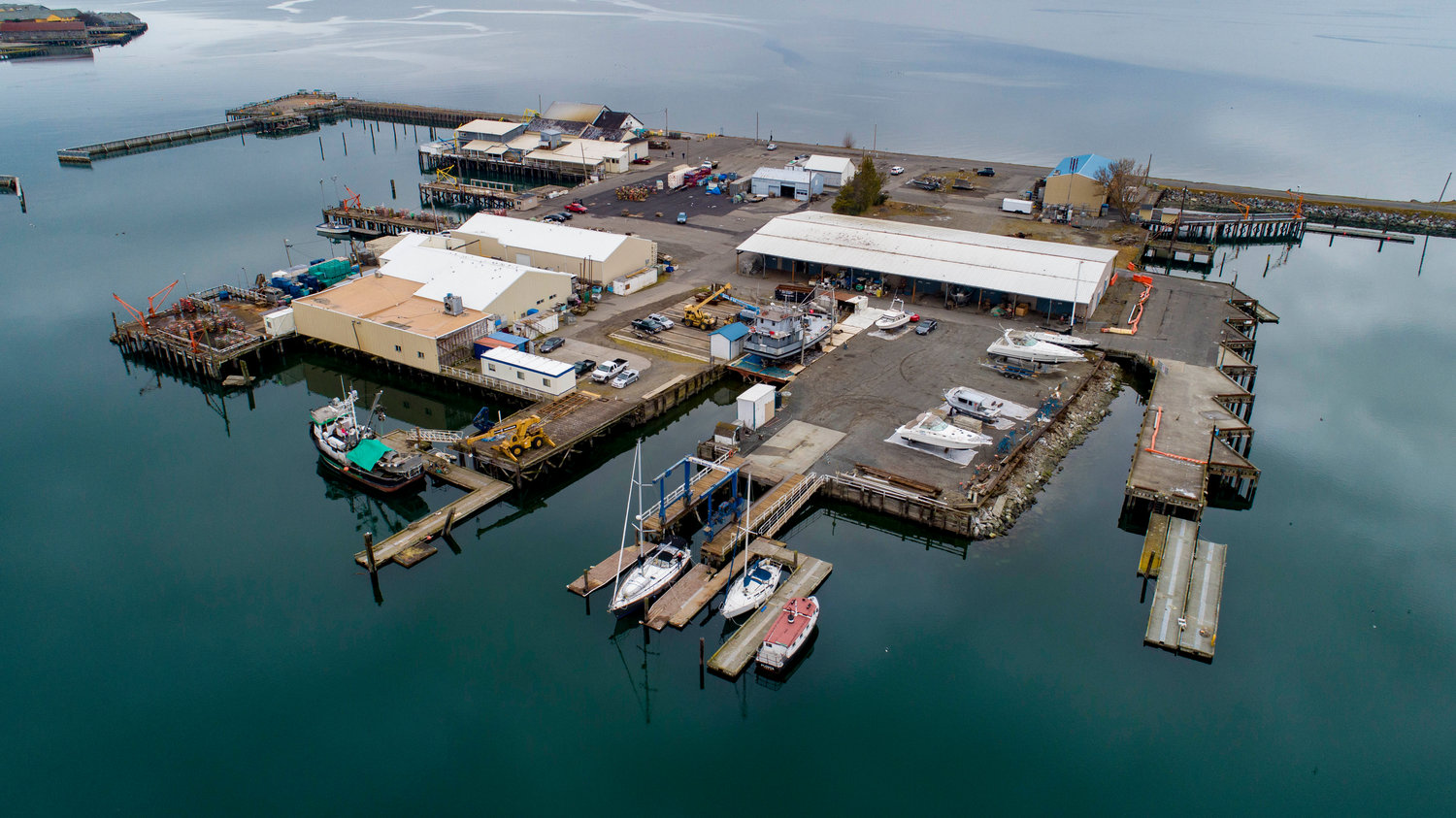
The Washington State Department of Ecology has opened public comment for the final stages of the Port of Bellingham’s Westman Marine cleanup in Blaine Harbor, which will remove decades of contamination from boatyard maintenance and repair.
Construction is expected to begin this summer and continue through at least 2027. The cleanup work is estimated to cost $28 million, and a state cleanup grant could reimburse the port for up to half the costs.
The public is being asked to comment on the legal document that details Ecology’s cleanup plan for the port as well as an updated public participation plan.
The 30-day comment period runs through April 21.
The Westman Marine cleanup site is at 218 McMillan Ave. in the southwest corner of Blaine Harbor. It includes 1 acre of upland cleanup and 27 acres of sediment cleanup in the water.
The upland cleanup will remove 2 feet of contaminated soil and replace it with new soil as well as take out marine structures blocking contaminated soil. For the water cleanup, a new bulkhead will be installed to help with sediment dredging and prevent the spread of contaminated soil.
Port of Bellingham spokesperson Mike Hogan said after the clean up is finished the port will install new marine trades infrastructure including a travel lift, piers and a modern stormwater system.
“These improvements will reactivate the property as a do-it-yourself boatyard where a wide range of marine repairs can be completed with the support of local maritime businesses,” Hogan said.
Starting in the early 1950s, the port began leasing the property to several marine businesses that contaminated the area through boatyard maintenance and repair, before current environmental regulations.
The project is named after a former tenant, Westman Marine, that occupied the space when the contamination was found. Ecology has said the current tenant, On-Board Marine Services, did not contribute to the contamination.
In 2001, the port began investigating the contamination, which eventually led to an interim cleanup that removed 420 tons of contaminated soil in 2014.
In 2023, Ecology finalized a plan to finish cleaning the site.
Contamination, including metals, polychlorinated biphenyls (PCBs) and tributyltin which prevent the growth of marine life, was found in soil and sediment.
The cleanup has followed the state’s environmental cleanup law, the Model Toxics Control Act, which has required Ecology to solicit public comment throughout the project.
“Cleaning up historic contamination and reactivating strategic marine industrial properties in support of working waterfront jobs is a priority for the Port of Bellingham,” Hogan said.
To provide a comment, visit Ecology’s website at bit.ly/4sAchwh.